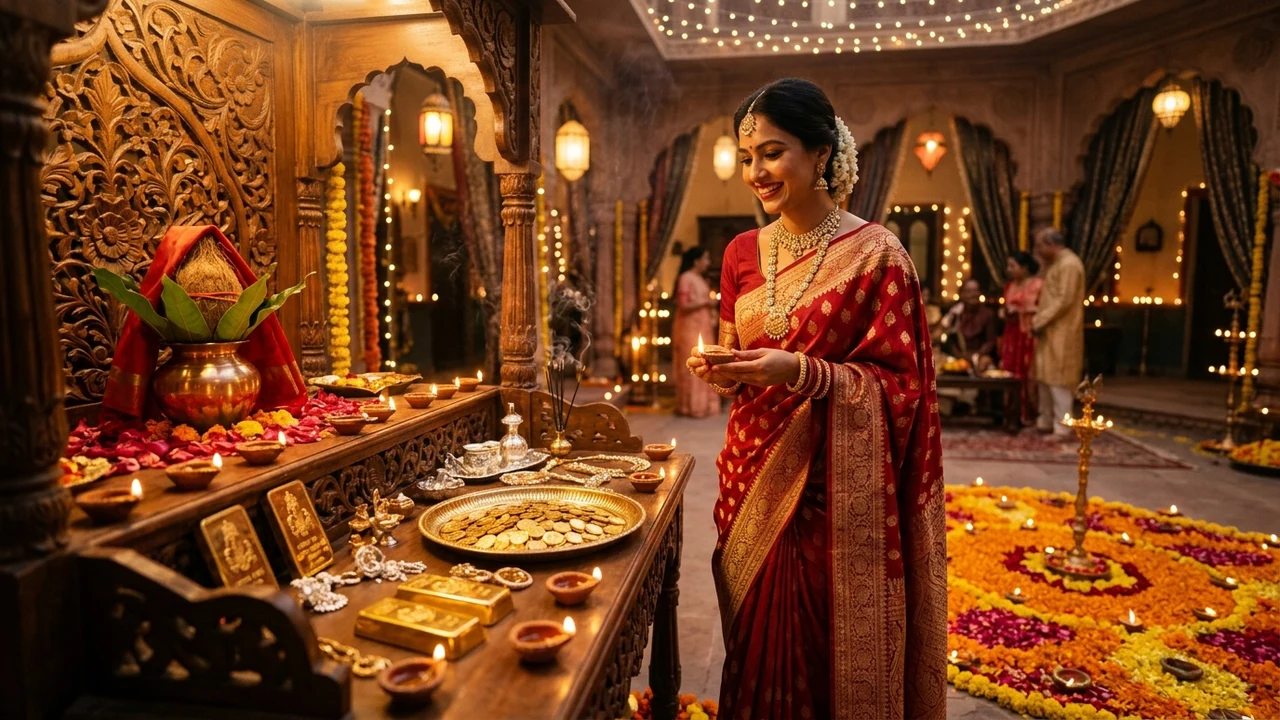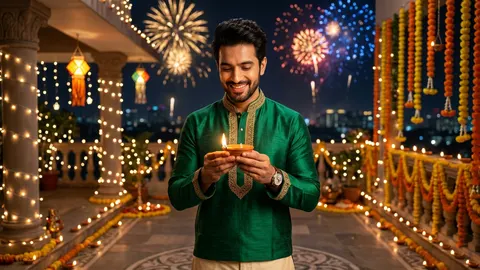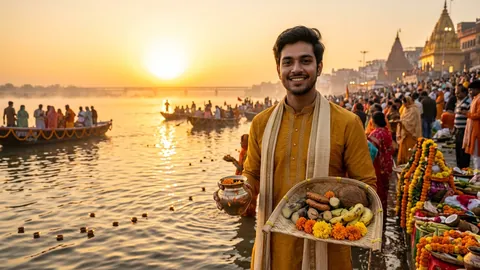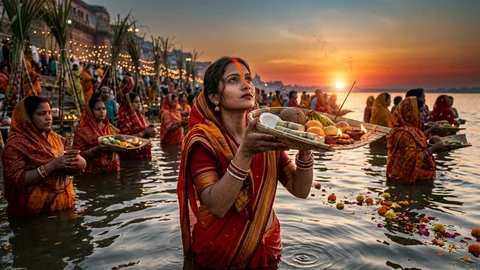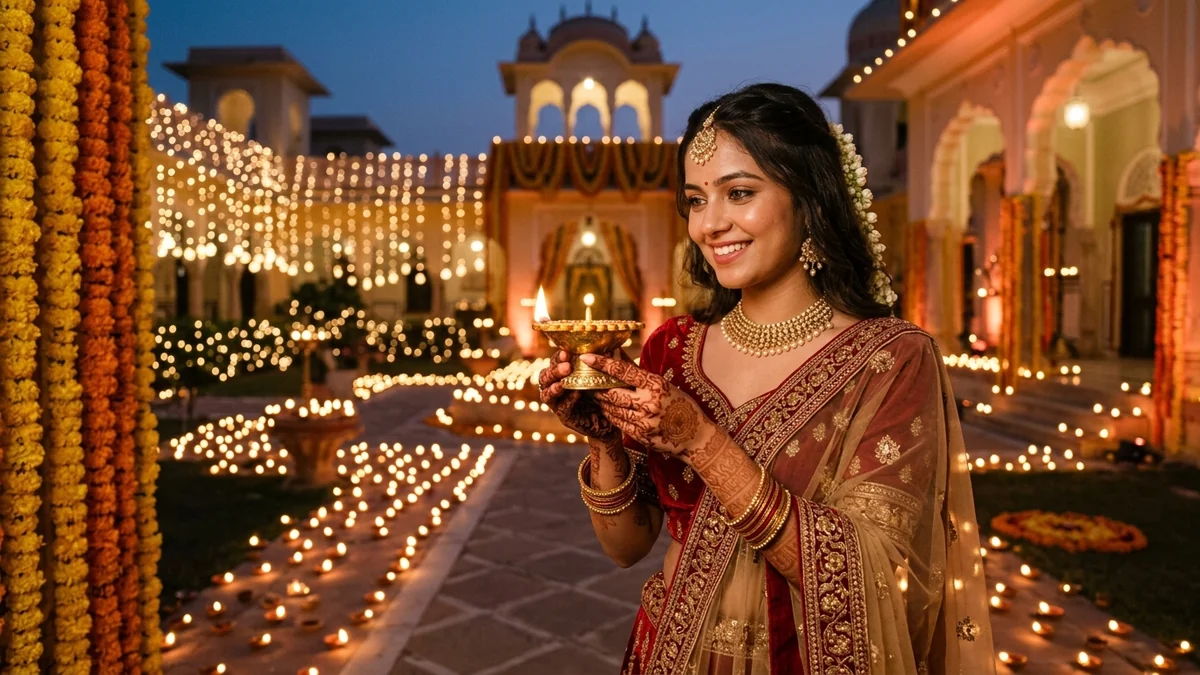
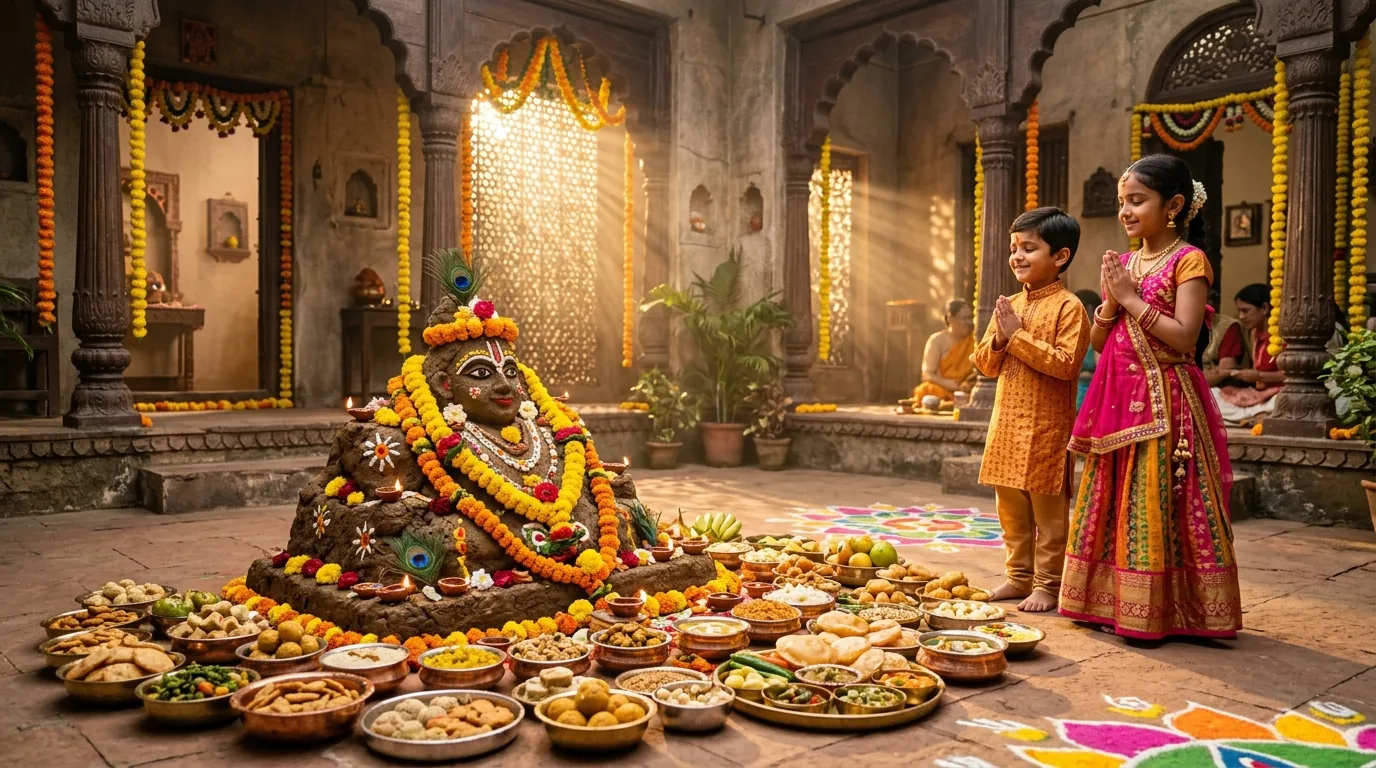
Govardhan Puja, also revered across India as Annakut (meaning "mountain of food"), is celebrated on the first lunar day of Shukla Paksha in the Hindu month of Kartik—the day immediately following Diwali. Centered on nature worship, environmental gratitude, and Lord Krishna's divine protection of Braj residents, families across the world create sacred govardhan puja images at home by sculpting the beloved Govardhan Maharaj deity in their courtyards, preparing an elaborate 56 Bhog feast, and circumambulating with incense and singing devotional bhajans.
In 2026, millions of devotees and creators are leveraging next-generation generative AI tools like Google Gemini (powered by Imagen 3) and ChatGPT Plus (GPT-4o DALL-E 3) to design high-definition festive portraits, family devotional scenes, and traditional cow dung Govardhan sculpture photos. Whether you are seeking realistic govardhan puja prompt ideas, cow dung deity decoration inspirations, or Annakut 56 Bhog visual compositions, this comprehensive guide offers 10+ rigorously tested copy-paste prompts complete with exact camera apertures and cultural styling nuances.
| Prompt # | Govardhan Style | Key Elements & Props | Lighting & Lens |
|---|---|---|---|
| 1. Cow Dung Deity Close-up | Traditional Courtyard Sculpture | Mor Pankh Crown, Marigold Garlands, Diyas | 50mm f/1.8 Warm Flame Glow |
| 2. Annakut 56 Bhog Mountain | Royal Food Offerings | Brass Thalis, Saffron Rice, Sweets, Makhan | 35mm f/2.0 Ambient Camphor Light |
| 3. Sibling Parikrama Ritual | Courtyard Circumambulation | Copper Lota Gangajal Stream, Aarti Thali | 85mm f/1.4 Morning Sunbeams |
| 4. Mother & Son Adornment | Family Verandah Decorating | Bandhani Saree, Genda Flowers, Chandan Tilak | 50mm f/1.8 Natural Window Light |
| 5. Evening Deepotsav Terrace | Twilight Terrace Illumination | Dozens of Earthen Diyas, Fairy Lights | 35mm f/1.4 Low-light Bokeh |
| 6. Gaumata Sacred Worship | Cow & Calf Gopashtami Puja | Haldi Kumkum Stamp, Marigold Bells, Jaggery | 85mm f/1.8 Golden Hour Dust |
| 7. Modern Balcony Setup | Urban Apartment Festivity | City Skyline Bokeh, Velvet Chauki, Diya Grid | 35mm f/1.8 Modern Night Ambient |
| 8. Floor Floral Rangoli Art | Krishna Lifting Govardhan Motif | Flower Petals, Rice Flour, Shimmering Diyas | 24mm f/2.8 Overhead Top-Down |
| 9. Sacred Shankh Aarti | Spiritual Climax in Mandir | Pancha-Pradip Camphor Fire, Conch Shell | 85mm f/1.4 Dynamic Motion Freeze |
| 10. Heritage Kitchen Prasad | Grandmother Culinary Craft | Iron Kadhais, Golden Puris, Kulhad Kheer | 50mm f/1.8 Steam & Morning Light |
- 10+ Viral Govardhan Puja AI Prompts for Home (Copy & Paste)
- Why Govardhan Puja is Celebrated: Mythological Story
- What is Govardhan Puja & How to Celebrate at Home
- How to Craft the Cow Dung Govardhan Deity
- Annakut (56 Bhog): Meaning and Spiritual Significance
- Google Gemini vs. ChatGPT Plus for Festival Photography
- Frequently Asked Questions (FAQ)
10+ Viral Govardhan Puja AI Prompts for Home (Copy & Paste)
Below are 10 custom-engineered, copy-ready AI photo prompts. Click View Prompt to view the full prompt in a modal or Copy Prompt to copy it directly with one tap for instant use in Google Gemini, ChatGPT, or Grok.
1. Traditional Cow Dung Govardhan Maharaj Deity with Mor Pankh & Marigold Diyas
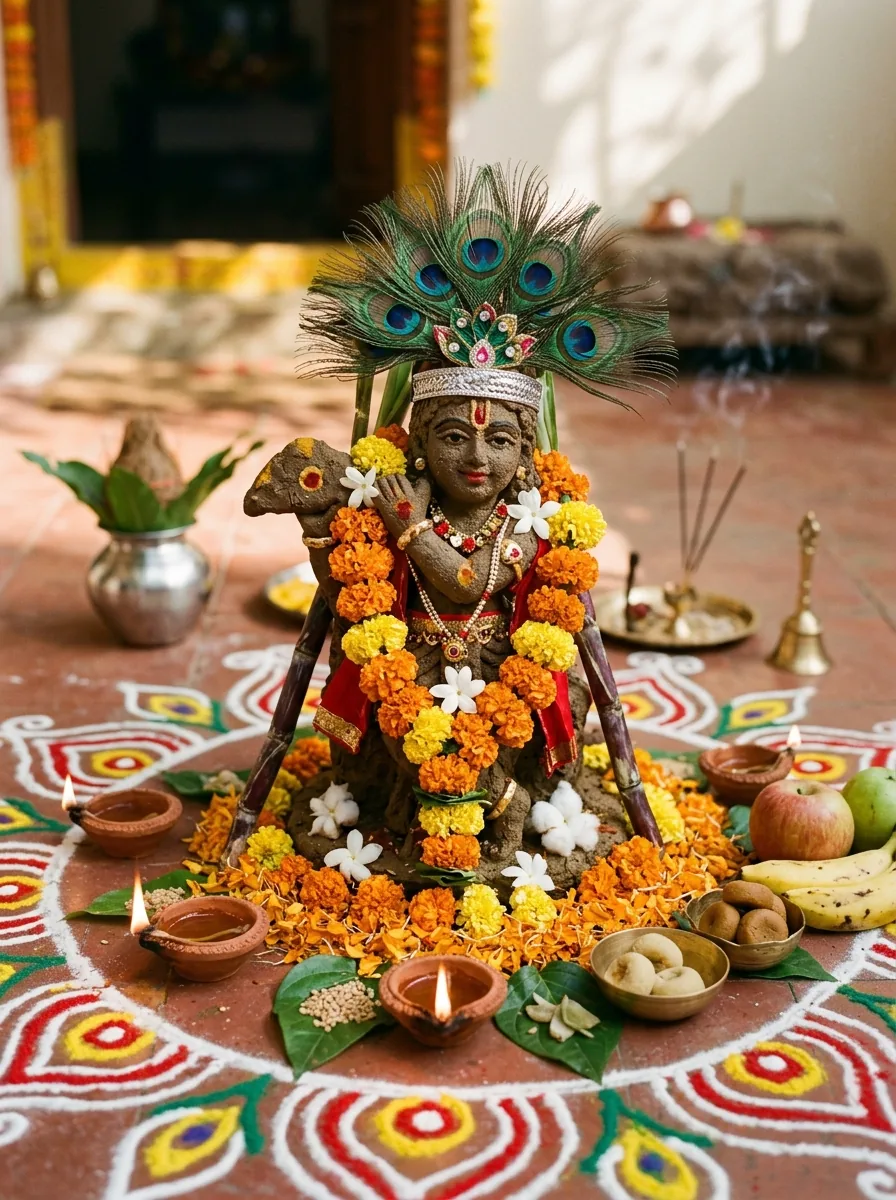
Why this works: Authentic Indian festive aesthetics rely on natural earth elements. Specifying the peacock feather and steady ghee flames gives this image deep cultural reverence.
2. 56 Bhog Annakut Mountain of Food Offerings in Traditional Brass Thalis
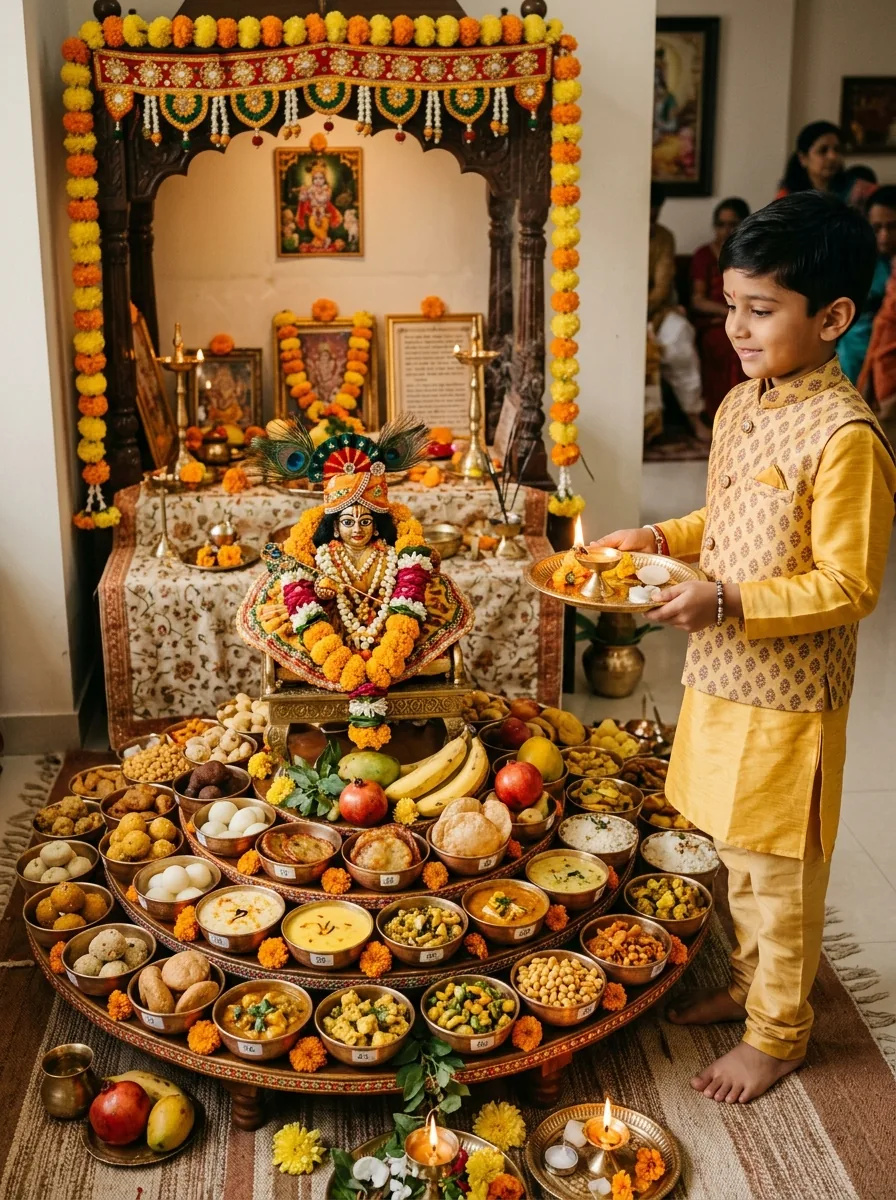
Why this works: High-frequency food details in traditional brassware create an opulent devotional composition that pops on social feeds.
3. Brother and Sister Performing Courtyard Govardhan Parikrama Ritual
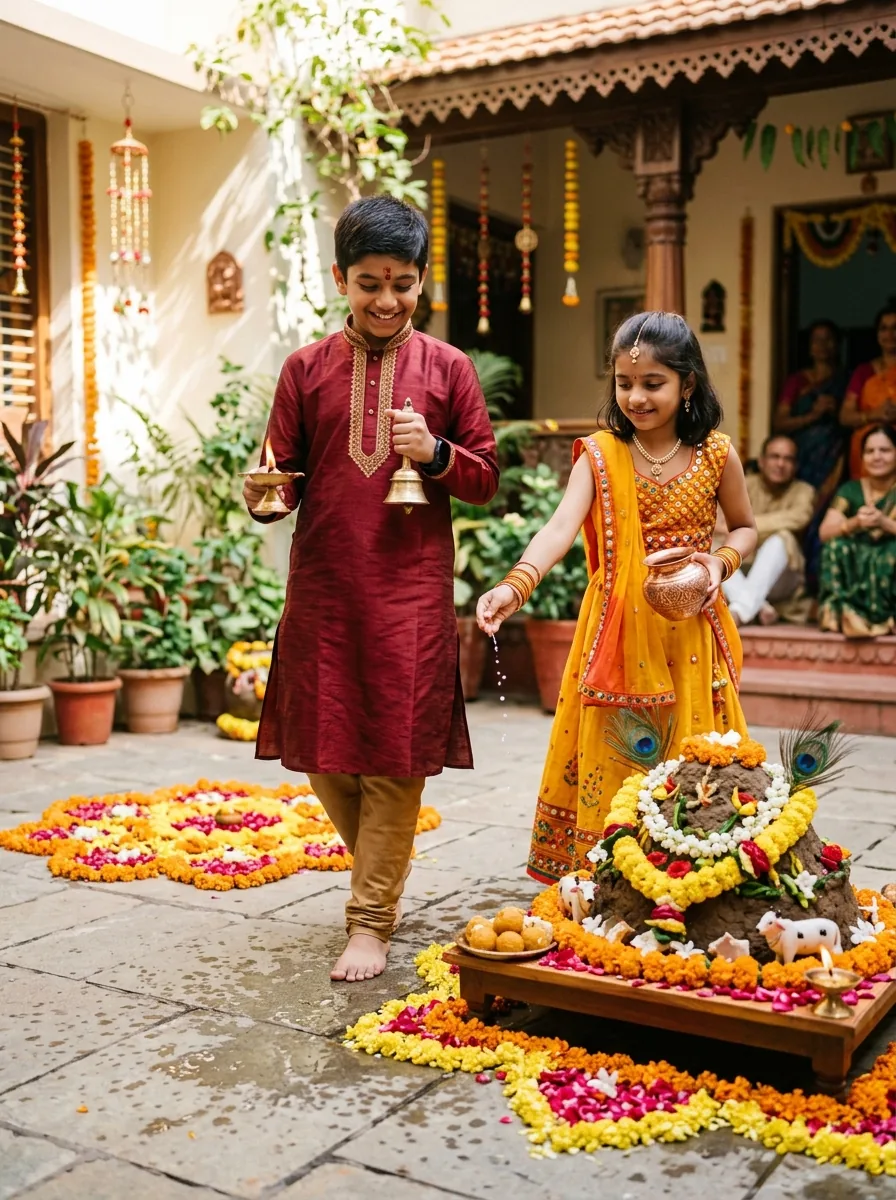
Why this works: Candid movement combined with holy water pouring delivers dynamic visual storytelling with natural emotion.
4. Mother and Son Decorating Govardhan Deity with Marigold Garlands
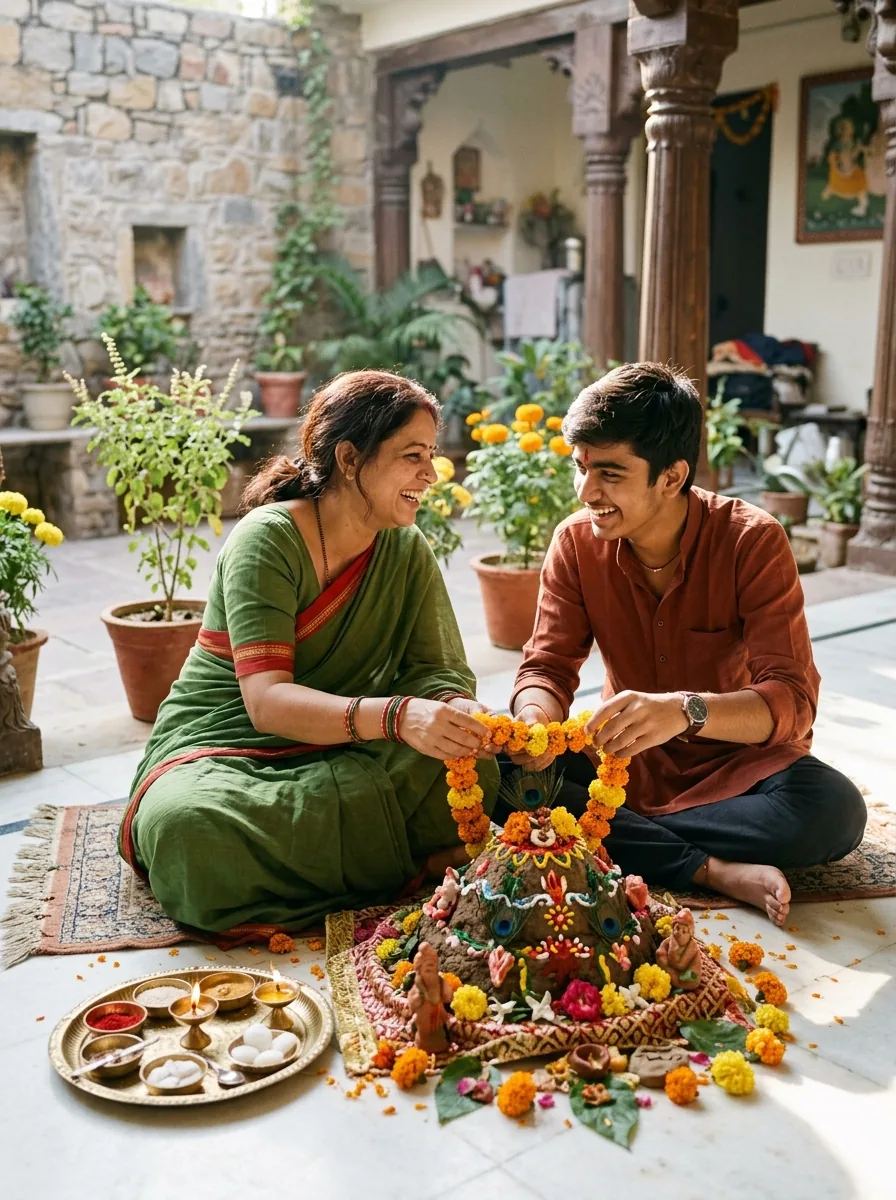
Why this works: The interplay between morning lattice sunbeams and family bonding creates an emotionally resonant festive photo.
5. Evening Deepotsav Courtyard Terrace Diya Lighting Ceremony
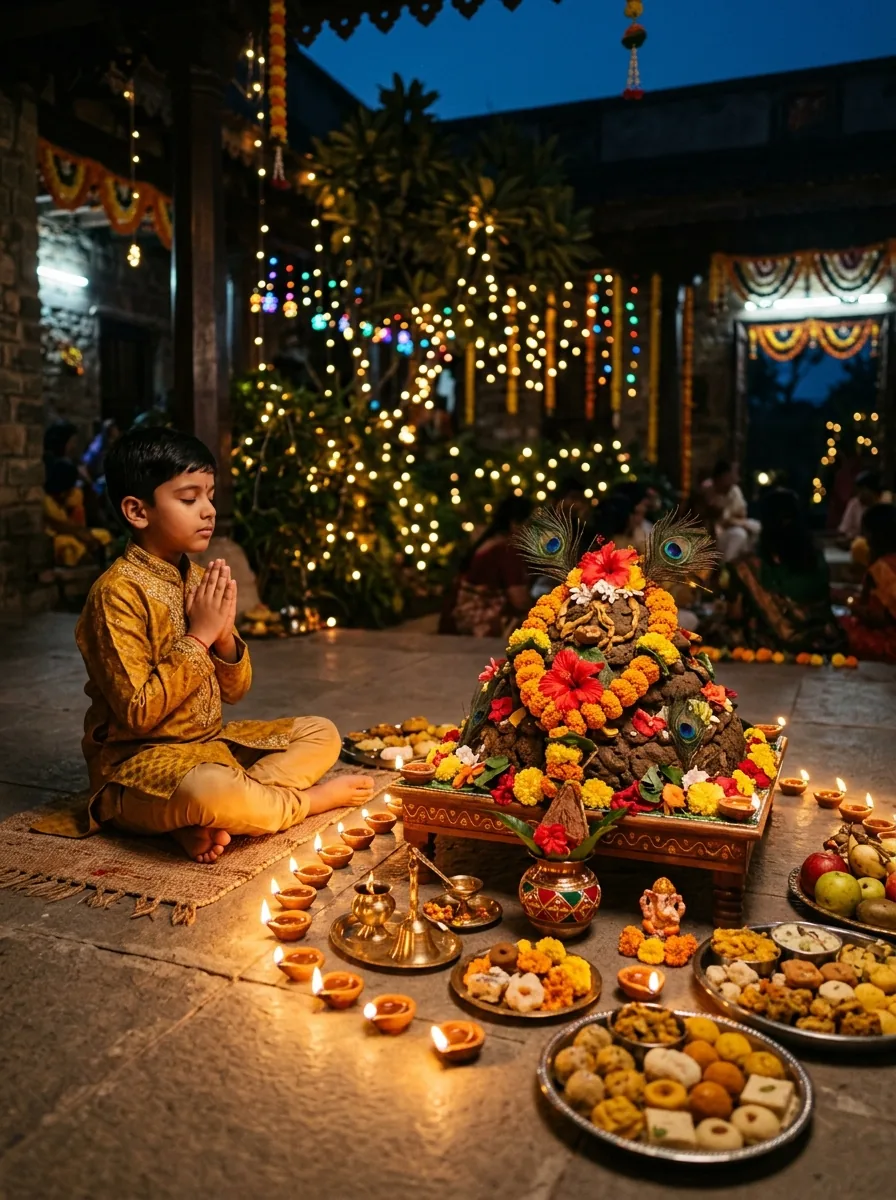
Why this works: Twilight color contrast (warm flame orange vs cool twilight blue) produces high visual impact and viral engagement.
6. Gaumata (Cow and Calf) Sacred Puja with Haldi Kumkum Tilak & Jaggery
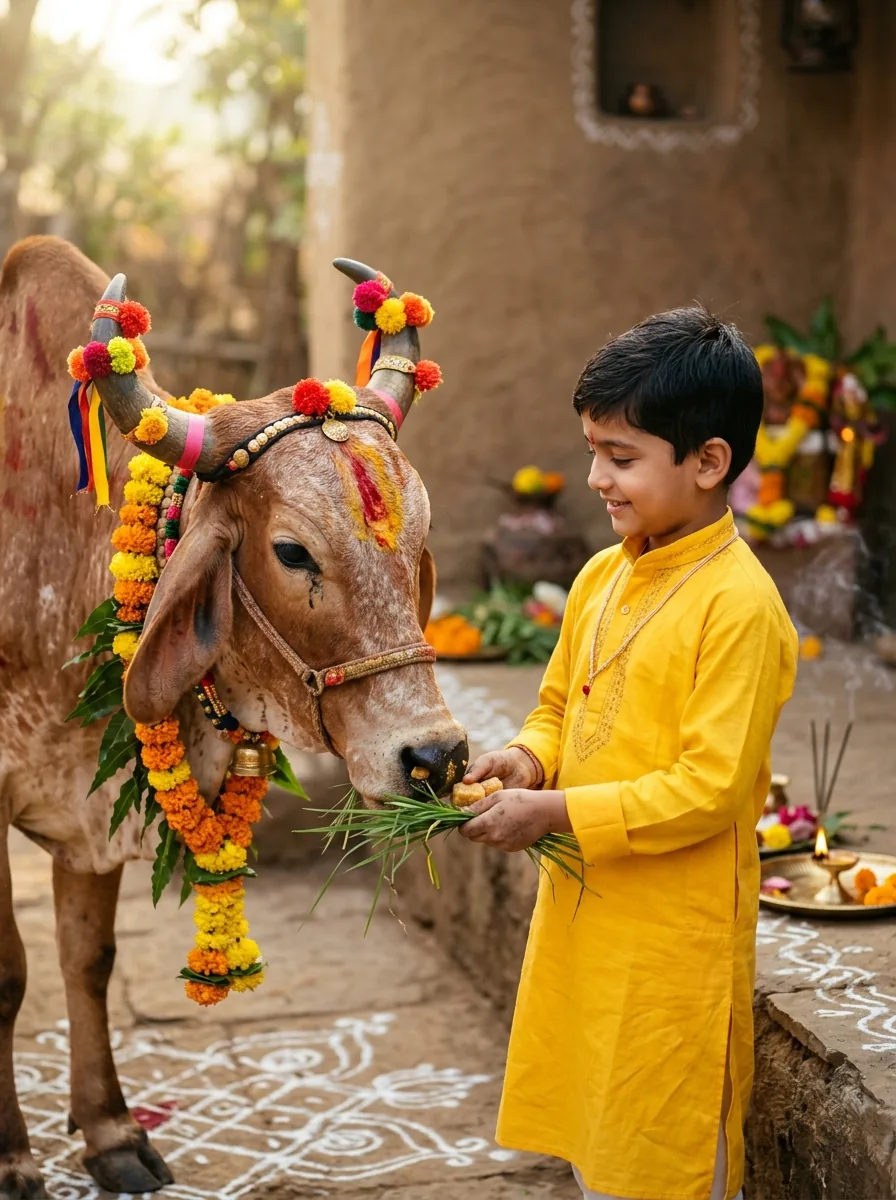
Why this works: Cow worship is the sacred soul of Govardhan Puja; authentic Gir cow features with floral garlands evoke deep cultural reverence.
7. Modern Apartment Balcony Govardhan Puja with Fairy Lights & Rangoli
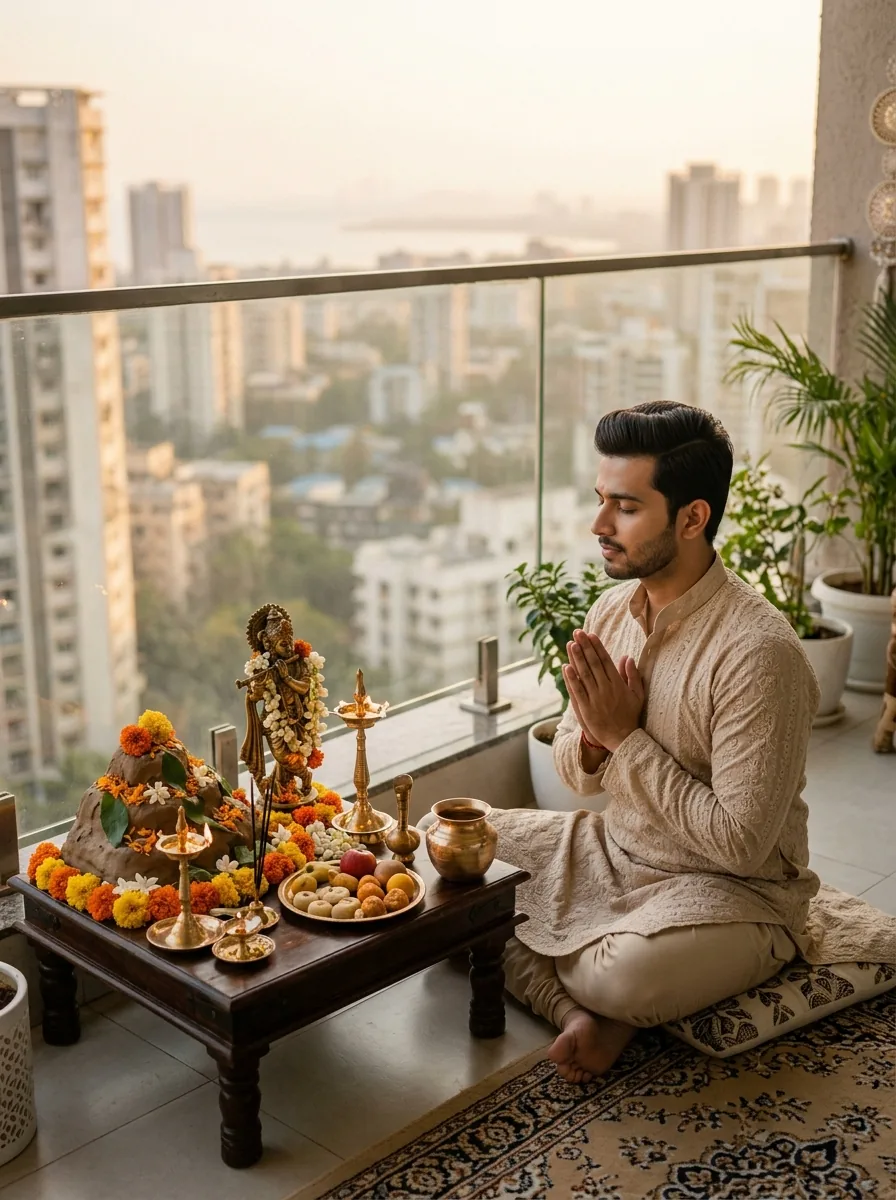
Why this works: Millennials living in apartments resonate with this practical setup combining high-rise aesthetics with traditional spirituality.
8. Lord Krishna Lifting Mount Govardhan Floor Floral Rangoli Artwork
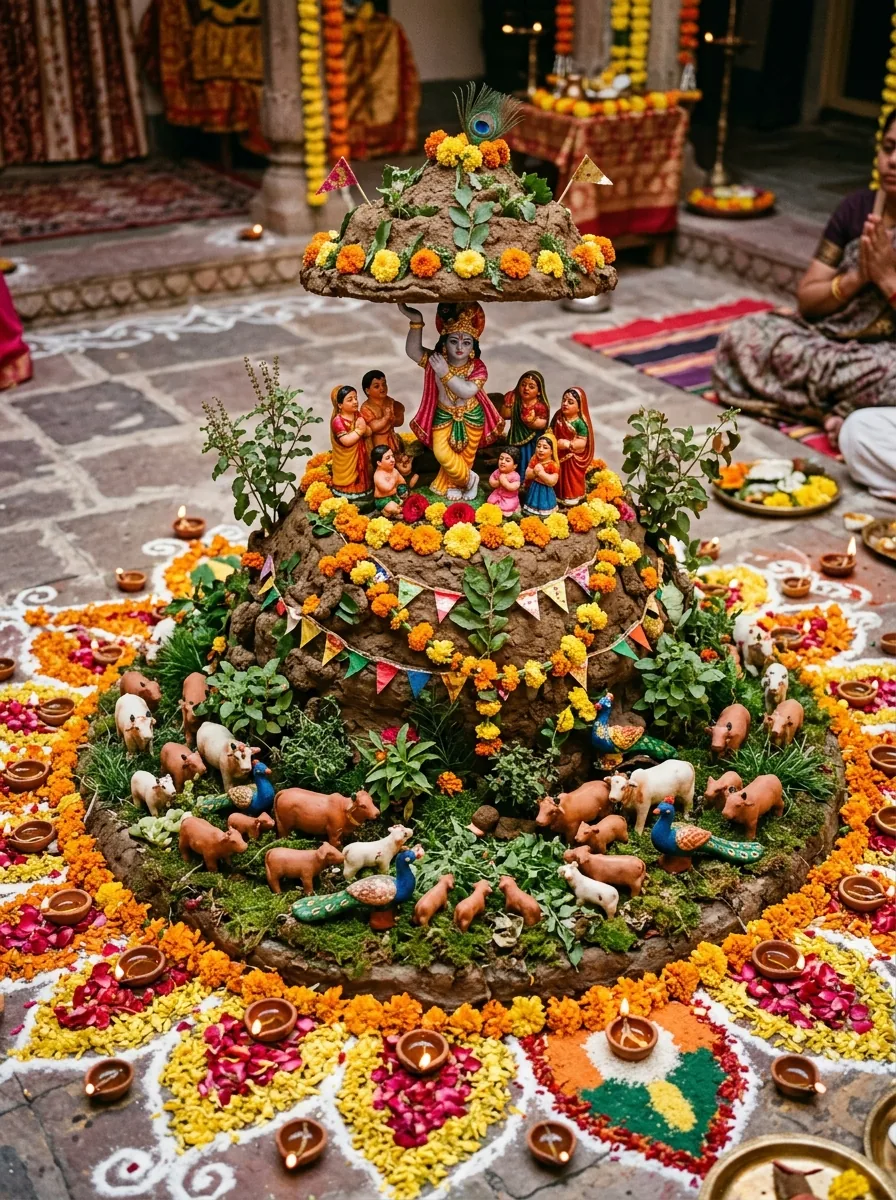
Why this works: Top-down floral art with glowing diyas provides breathtaking symmetry and tactile texture.
9. Sacred Shankh (Conch Shell) Aarti & Camphor Flare in Home Temple
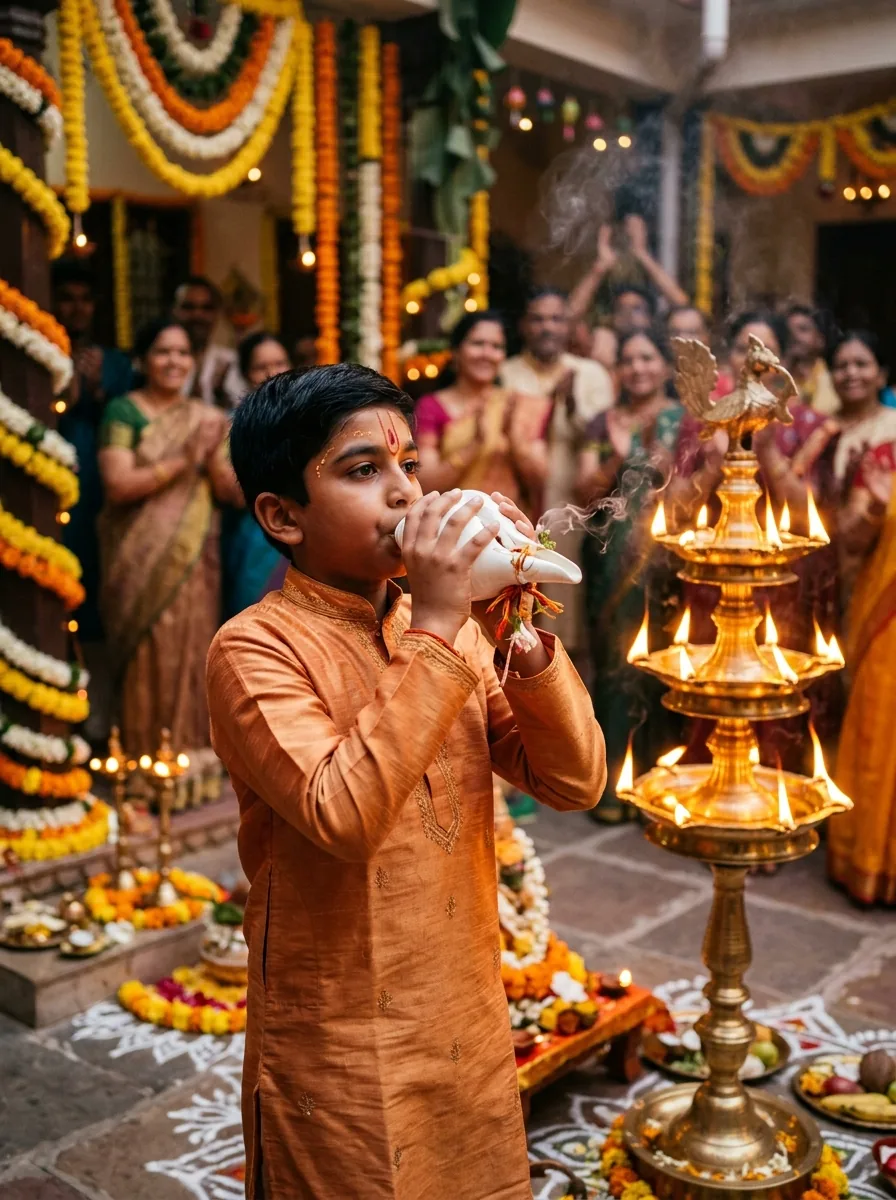
Why this works: Freezing camphor flames and sacred white smoke provides unmatched drama and spiritual intensity.
10. Traditional Heritage Kitchen Annakut Prasad Preparation by Grandmother
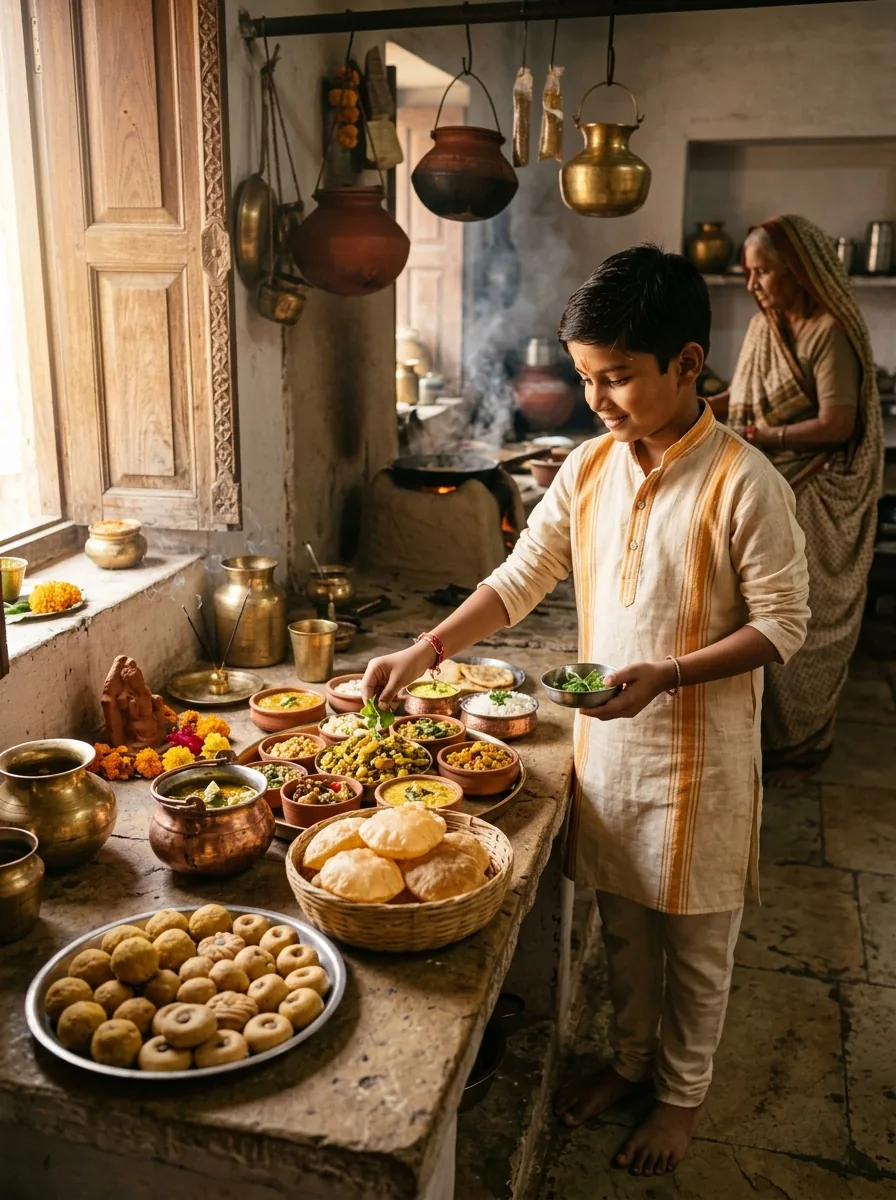
Why this works: Authentic grandmother nostalgia and traditional culinary craft evoke profound emotional resonance.
Why Govardhan Puja is Celebrated: Mythological Story of Krishna & Mount Govardhan
According to the sacred Bhagavata Purana, the residents of Braj (Vrindavan and Gokul) traditionally offered grand sacrifices to Lord Indra, the deity of rain and thunder, hoping for favorable rainfall. A young Lord Krishna questioned this age-old custom, teaching the villagers that true prosperity originates from Mother Nature itself—specifically the holy Govardhan Hill, which nourished their cows with luscious pastures, and the sacred forests that provided water and wood.
Convinced by Krishna's wisdom, the villagers worshiped Mount Govardhan instead. Enraged by the loss of his offerings, Indra unleashed catastrophic torrential rainstorms and thunder to submerge Braj. To shield his people, cattle, and forests, Lord Krishna effortlessly lifted the entire Govardhan mountain on his left little finger (Kanhaiya Giridhari) for seven continuous days and nights. Humbled and repentant, Indra conceded Krishna's supreme divinity. Since that era, Govardhan Puja represents unconditional divine refuge, ecological gratitude, and community harmony.
What is Govardhan Puja & How to Celebrate at Home Step-by-Step
Govardhan Puja is celebrated with immense joy in courtyards, terraces, and living rooms. If you are celebrating at home, here is the time-tested ritual progression:
- Cleaning the Courtyard: Purify the puja area with clean water or gangajal, preparing a spotless surface.
- Sculpting the Deity: Mold fresh cow dung and clay into a reclining male figure representing Govardhan Parvat, complete with hands, feet, and face.
- Adornment: Crown the head with a natural peacock feather, mark eyes with silver paper/cowrie shells, apply chandan and kumkum tilak, and wrap floral marigold garlands.
- Puja Offerings: Offer raw milk, curd, honey, batashe, sugarcane pieces, and freshly cooked prasad.
- Parikrama: Family members circumambulate clockwise around the deity while pouring gangajal or raw milk from a lota.
- Evening Aarti: Light mustard oil diyas and wave a camphor-lit brass thali while chanting Govardhan aarti and Krishna bhajans.
How to Craft the Cow Dung Govardhan Deity at Home
In Indian tradition, cow dung (Gobar) is revered for its antiseptic, purifying, and organic qualities. To construct a long-lasting, aesthetically beautiful home sculpture:
- Consistency: Mix fresh cow dung with a small portion of clean yellow river clay and gangajal to create a smooth, pliable texture that does not crack under the sun.
- Structure: Form an elongated central mound for the body and chest, small spherical mounds for limbs, and a raised disc for the divine face.
- Natural Accents: Use split green chana or dry whole lentils for teeth, small earthen diyas for the naval cavity, and sugarcane stalks to represent the lifting staff.
Annakut (56 Bhog): Meaning and Spiritual Significance
"Annakut" translates literally to a mountain of cooked grain. Because Krishna fasted for seven full days while holding Mount Govardhan—missing his usual eight meals per day (8 meals × 7 days = 56 meals)—devoted Brajwasis joyously prepared an astonishing feast of 56 distinct dishes to feed their beloved Kanhaiya upon Indra's retreat.
Today, families prepare regional delicacies including Annakut Kadhi, mix vegetable subzi made from every autumn vegetable, puris, dry fruits, saffron rice, and milk sweets to distribute as blessed prasad among neighbours and the underprivileged.
Google Gemini vs. ChatGPT Plus for Festival Photography
Both platforms yield stellar results when provided with explicit prompt engineering:
- Google Gemini (Imagen 3): Unmatched at rendering lifelike Indian skin tones, realistic clay and cow dung textures, natural morning daylight through verandas, and delicate flower petal micro-details.
- ChatGPT Plus (GPT-4o DALL-E 3): Excellent at rendering complex temple architectures, crowded twilight terrace scenes, and dramatic camphor flame smoke particles.
Frequently Asked Questions (FAQ)
What is the primary spiritual reason why Govardhan Puja is celebrated?
Govardhan Puja commemorates Lord Krishna lifting the Govardhan mountain on his little finger to shield the villagers, animals, and flora of Braj from the torrential thunder and floods unleashed by Indra. It honors ecological reverence and divine protection.
What materials are traditionally used to make Govardhan images at home?
Devotees traditionally sculpt the deity using pure cow dung (gobar), clay, gangajal, peacock feathers, marigold and hibiscus flowers, silver paper or cowrie shells for eyes, earthen mustard oil diyas, and sugarcane stalks.
How can I generate photorealistic Govardhan Puja photos with my real face in Google Gemini?
Upload your high-resolution front-facing portrait to Google Gemini, copy any of our prompts above, and append: "Maintain 100% exact facial likeness, bone structure, and skin tone from the uploaded reference photo, placed naturally into this festive Govardhan Puja devotional setting."
What is Annakut and why are 56 items offered?
Annakut means a "mountain of food". Because Lord Krishna fasted for seven continuous days without his usual eight daily meals while holding Mount Govardhan, devotees prepare 56 dishes (7 × 8) as a gesture of deep devotion and gratitude.
Join Our Community
Stay connected and get the latest viral AI photo editing prompts.